Did you know that the global gluten-free products market is projected to reach over $11 billion by 2027? This significant growth highlights the increasing demand for delicious and accessible gluten-free options, and to achieve those perfect bakes, the right tools are absolutely essential. Whether you’re a seasoned baker or just starting your gluten-free journey, equipping your kitchen with specific tools can make all the difference between a dense, crumbly mess and a light, airy delight.
Why Specialized Tools Matter in Gluten-Free Baking
Gluten, found in wheat, barley, and rye, provides elasticity and structure to traditional baked goods. Without it, gluten-free flours behave differently. They can be more absorbent, prone to crumbling, and may not rise as effectively. Specialized tools help compensate for these differences, ensuring better results and a more enjoyable baking experience.
Measuring with Precision
Accuracy is paramount in gluten-free baking. Unlike traditional baking where slight variations might be forgiving, gluten-free recipes often require precise measurements to achieve the desired texture and consistency.
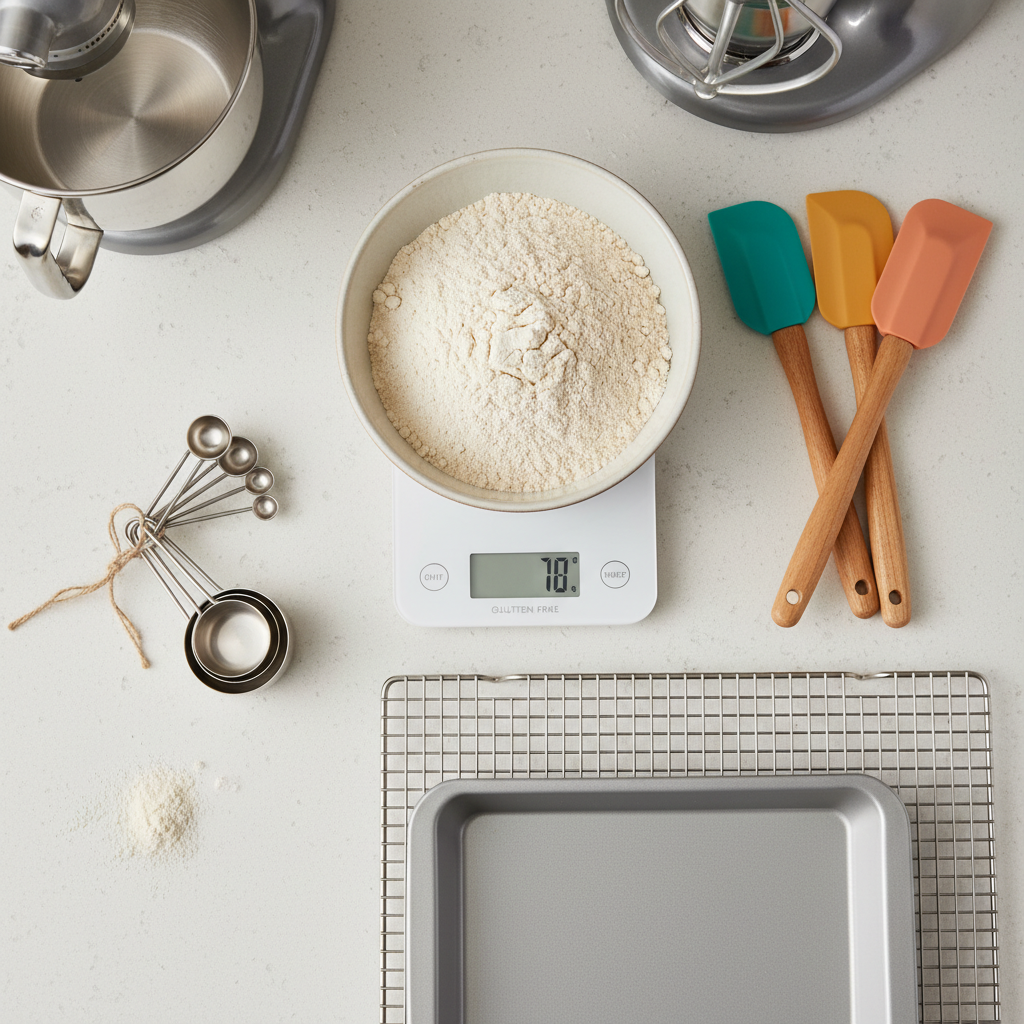
- Digital Kitchen Scale: This is arguably the most crucial tool. Measuring flour by volume (cups) can be highly inaccurate with gluten-free blends, as different flours have varying densities. A scale ensures you’re using the exact amount specified in the recipe. The FDA emphasizes accurate nutritional information, and precise ingredient measurement is the first step.
- Measuring Cups and Spoons: While a scale is preferred for dry ingredients, high-quality, clearly marked measuring cups and spoons are still vital for liquids and smaller amounts of ingredients.
Mixing and Kneading Alternatives
The elasticity that gluten provides means traditional kneading techniques aren’t necessary (or even beneficial) for most gluten-free doughs.
- Stand Mixer with Paddle Attachment: A stand mixer is a lifesaver for gluten-free baking. It efficiently mixes sticky doughs and batters without requiring extensive manual effort. The paddle attachment is ideal for most gluten-free recipes.
- Silicone Spatulas: These are incredibly versatile for scraping down bowls, folding in ingredients gently, and spreading batters evenly.
Baking and Cooling Essentials
The way gluten-free goods bake and cool can also differ.
- Quality Baking Pans: Evenly heating pans are key. Opt for anodized aluminum or dark metal pans, which conduct heat well. Ensure your pans are the correct size to prevent over or under-baking. For those looking for specific rolls, gluten-free crescent rolls often benefit from well-greased pans.
- Cooling Racks: Allowing baked goods to cool completely on a wire rack is essential for gluten-free items. This prevents condensation from forming, which can make the bottom soggy. Proper cooling helps set the structure of the bake. According to King Arthur Baking, understanding flour properties is key, and cooling is part of that process.
- Parchment Paper or Silicone Baking Mats: These prevent sticking and make cleanup a breeze, especially with recipes that can be delicate.
Specialized Gluten-Free Equipment
- Dedicated Utensils: If you are baking for someone with Celiac disease, it’s crucial to have dedicated gluten-free utensils and equipment to avoid cross-contamination. This includes cutting boards, knives, and any mixing bowls. The Celiac Disease Foundation provides extensive resources on managing the condition, including dietary advice.
By investing in these essential tools, you’ll be well on your way to creating delicious, satisfying gluten-free baked goods that rival their traditional counterparts. Happy baking!
Frequently Asked Questions
What is the most important tool for gluten-free baking?
The most important tool for gluten-free baking is a digital kitchen scale. This is because gluten-free flours vary significantly in density, and measuring by weight ensures much greater accuracy than measuring by volume (cups), which is crucial for achieving the right texture.
Do I need a stand mixer for gluten-free baking?
While not strictly *essential*, a stand mixer is highly recommended. Gluten-free doughs and batters can be quite sticky and difficult to mix thoroughly by hand. A stand mixer with a paddle attachment makes the process much easier and ensures ingredients are properly combined.
Why is cooling so important for gluten-free baked goods?
Proper cooling on a wire rack is vital for gluten-free baked goods because they lack the structure that gluten provides. Cooling allows the internal structure to set and firm up. If cooled in the pan or on a solid surface, moisture can get trapped, leading to a soggy bottom and a crumbly texture.
Should I use separate baking equipment for gluten-free baking?
If you are baking for someone with Celiac disease or severe gluten sensitivity, it is absolutely critical to use separate, dedicated gluten-free equipment (utensils, bowls, pans, cutting boards) to prevent cross-contamination. For those simply choosing a gluten-free lifestyle without medical necessity, diligent cleaning of regular equipment is often sufficient, but dedicated tools offer extra peace of mind.
Are silicone baking mats better than parchment paper for gluten-free baking?
Both silicone baking mats and parchment paper are excellent for preventing sticking and making cleanup easier in gluten-free baking. Silicone mats are reusable and environmentally friendly, while parchment paper is disposable. The choice often comes down to personal preference and what works best for a specific recipe.